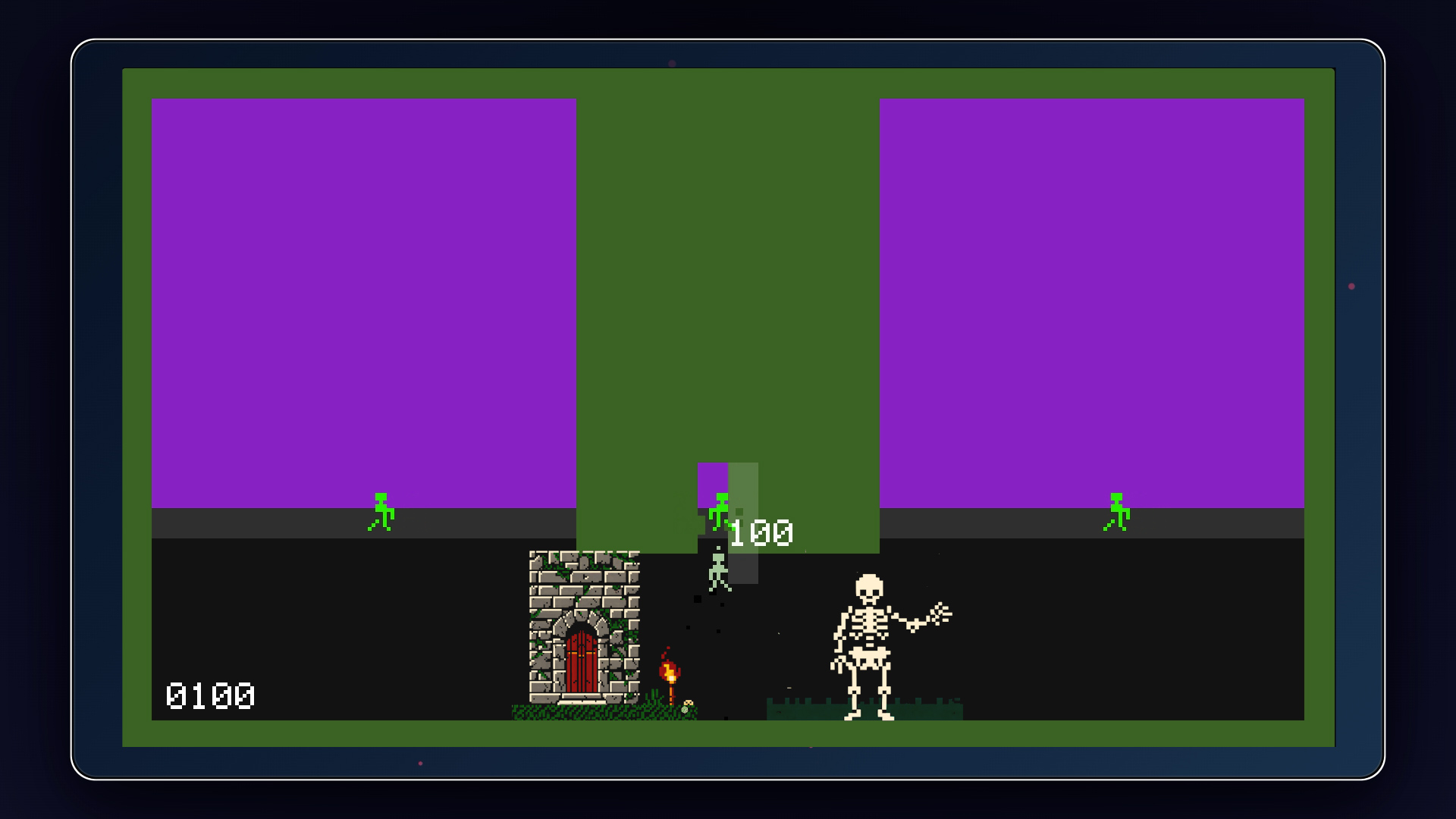
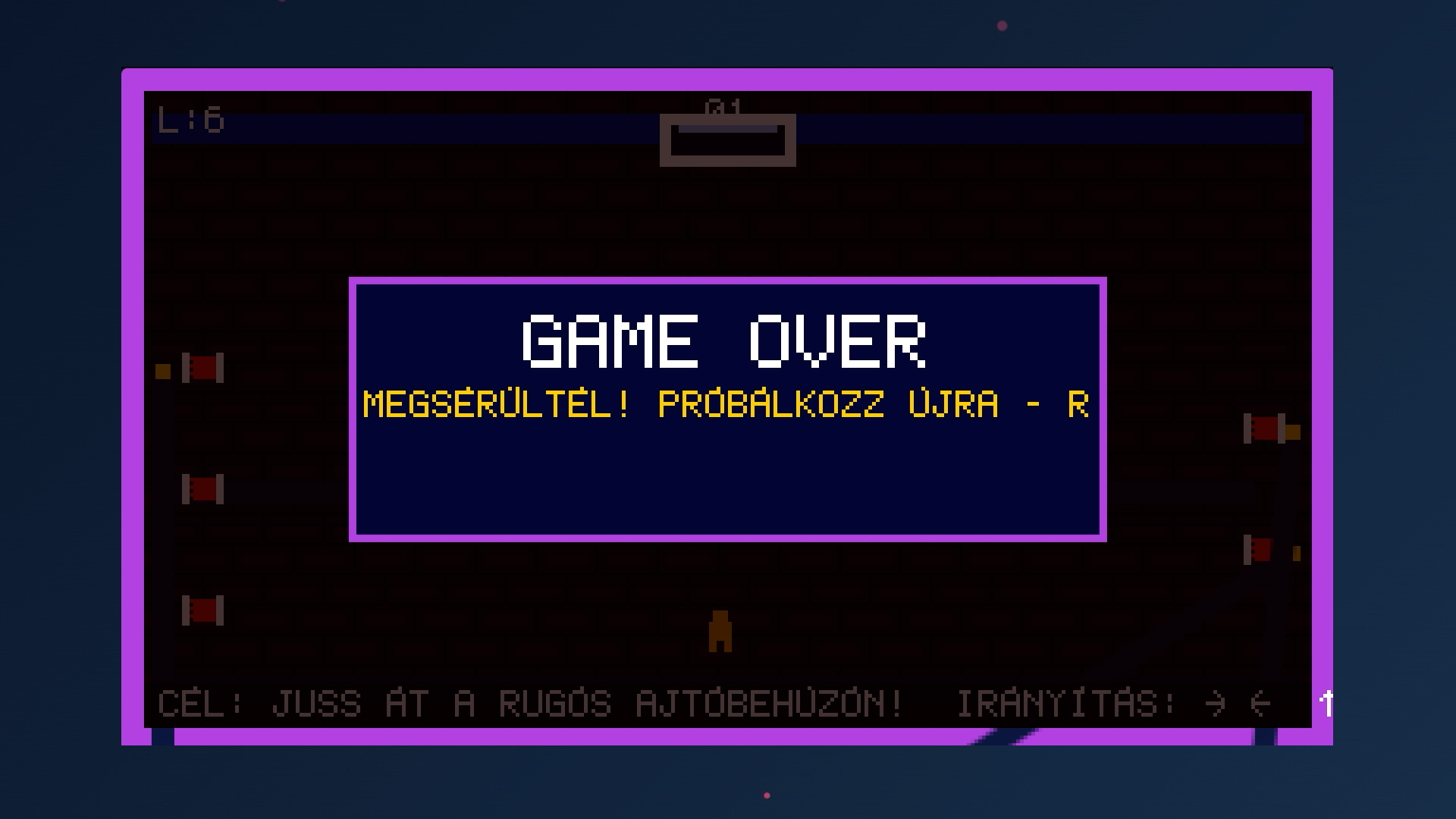
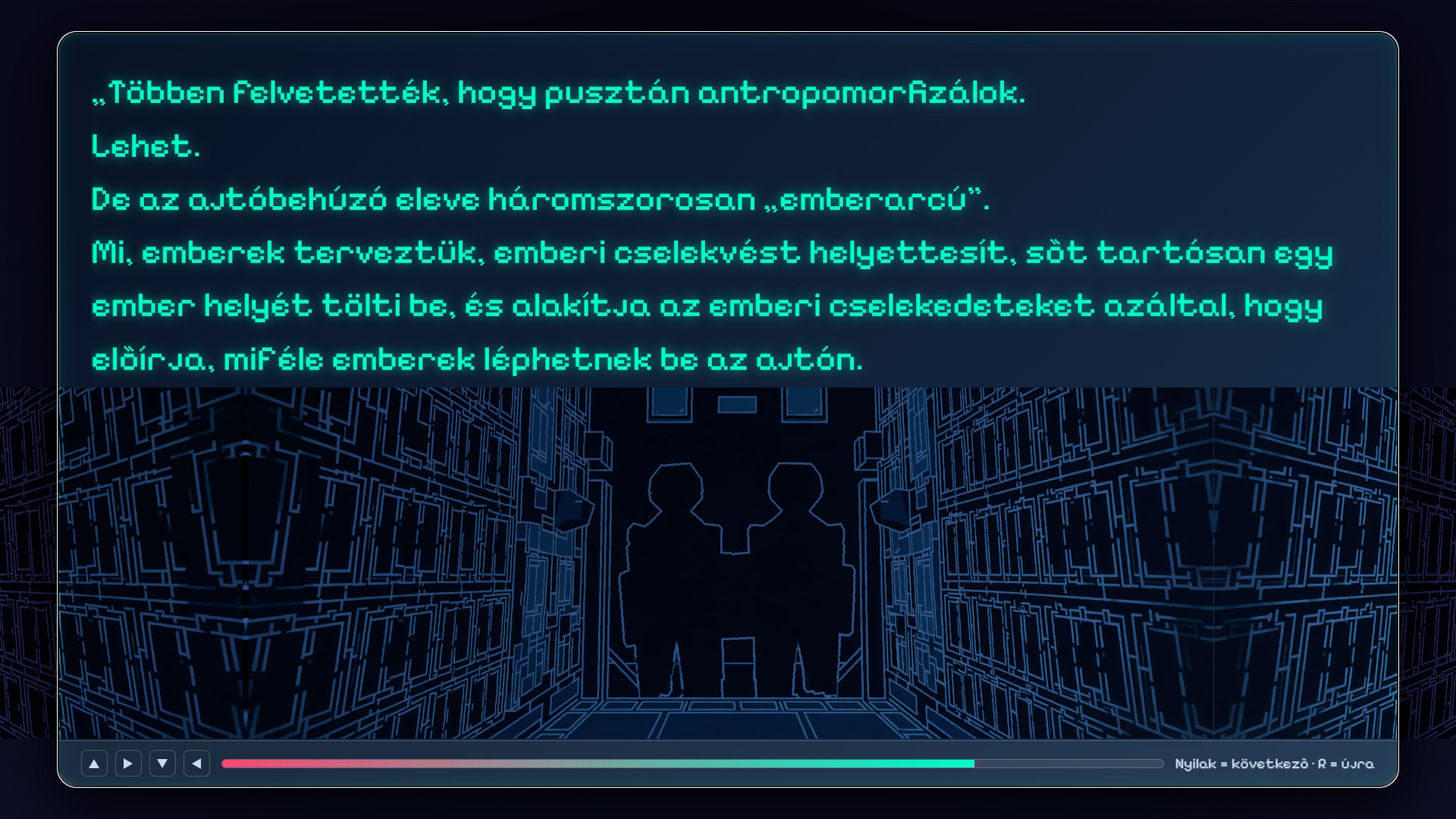
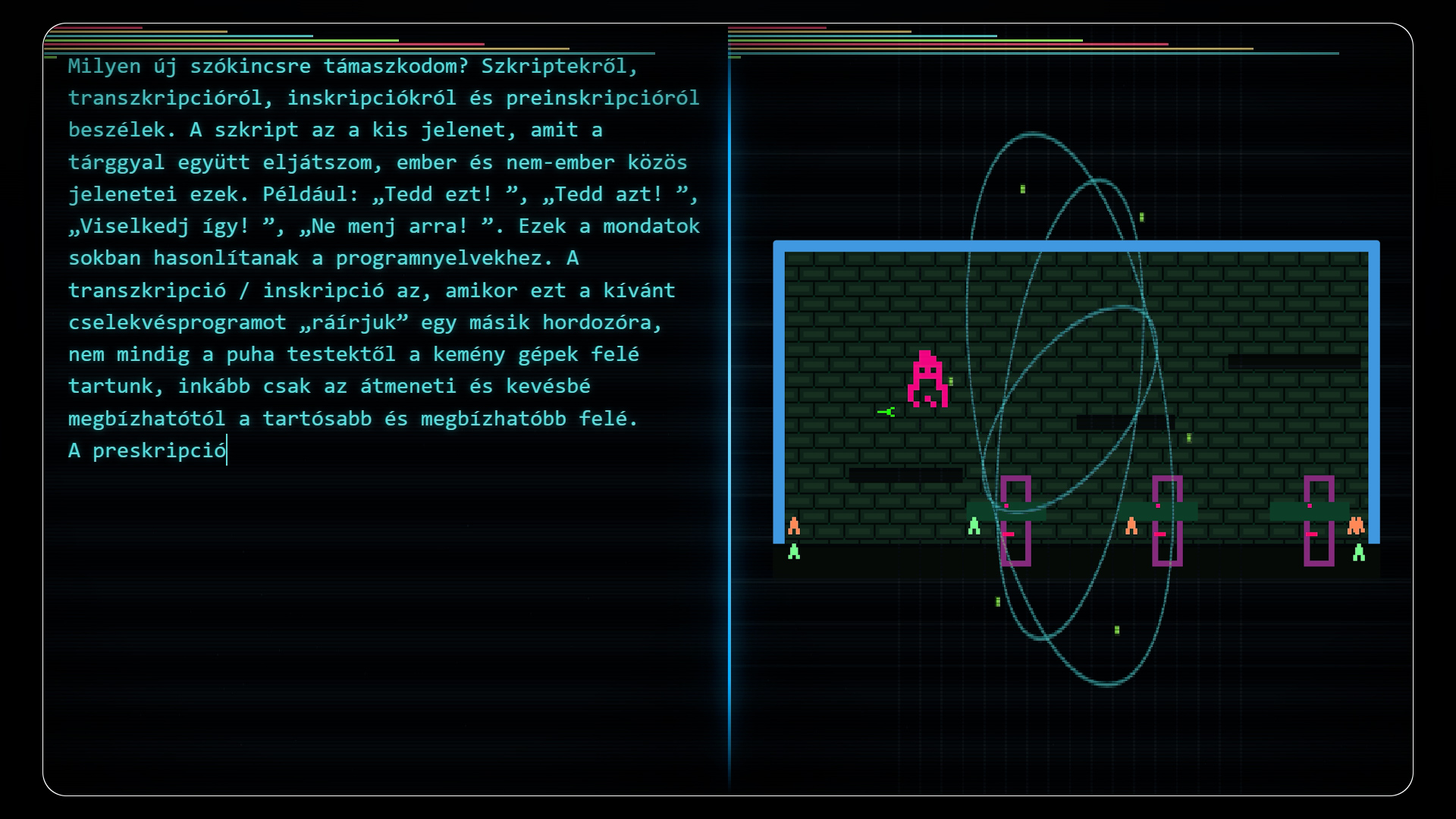
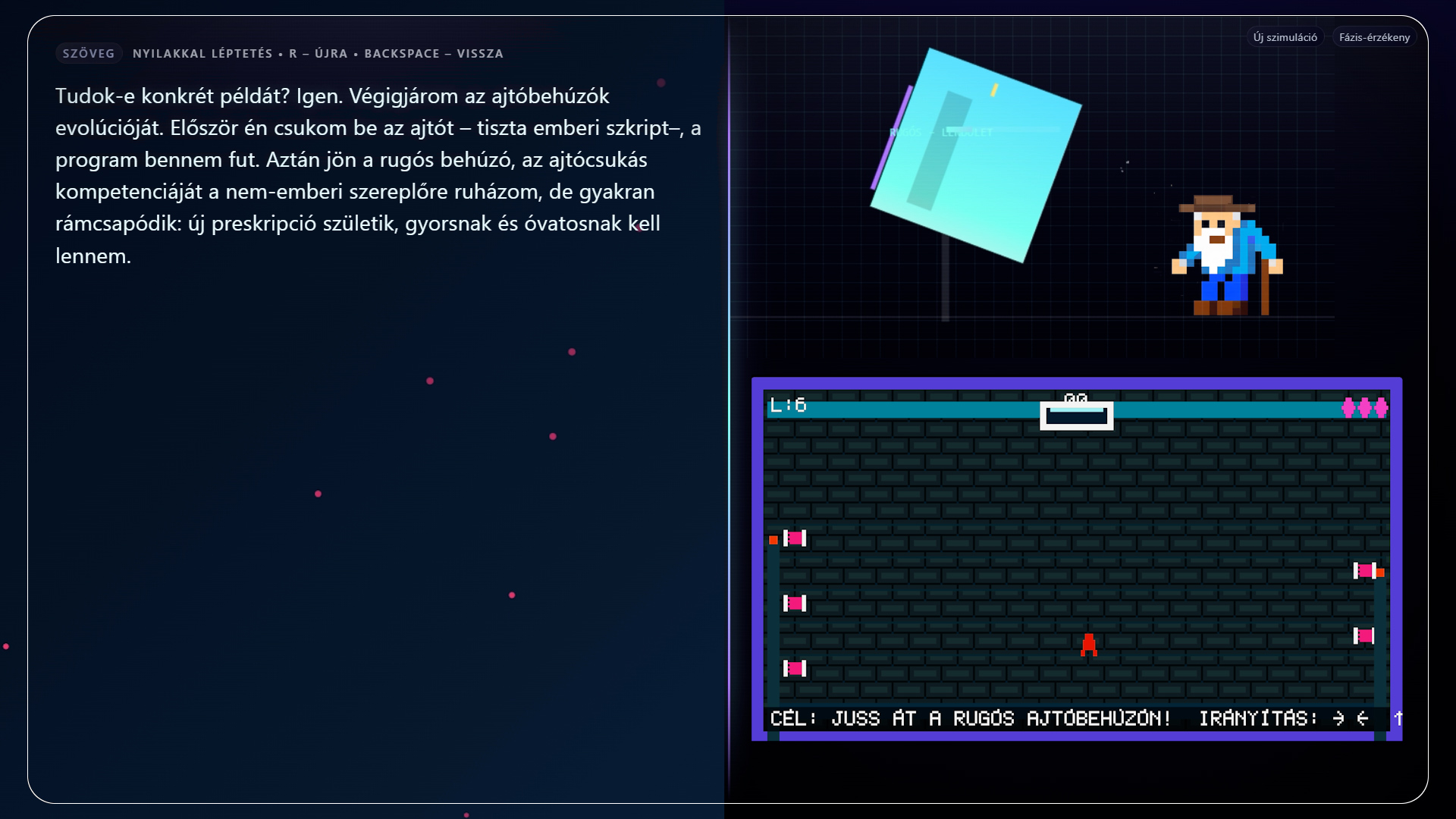
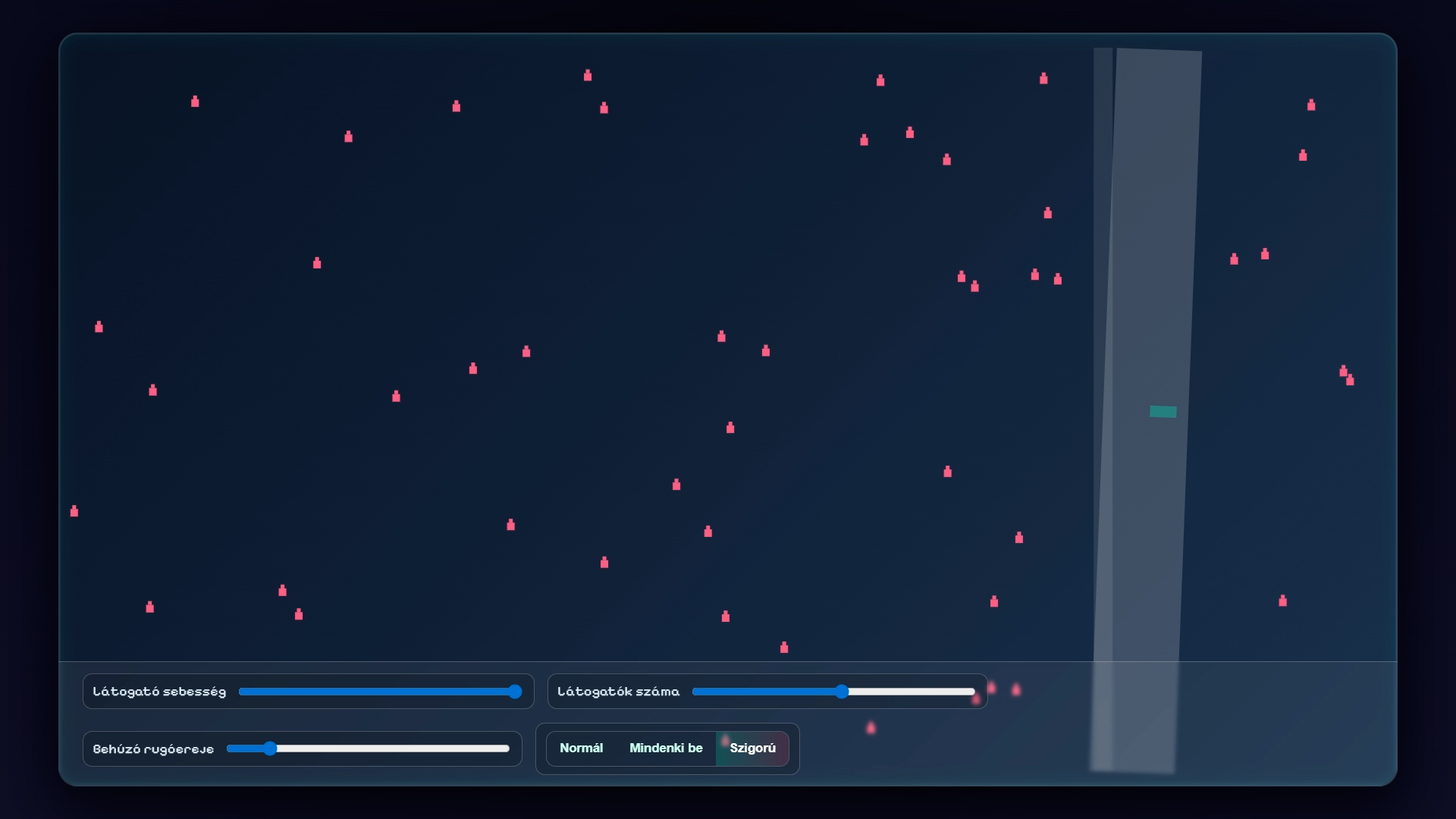
Technique: 2D human- and AI-based experimental animation made from the images of an 8-bit, vibe-coded HTML game, 2025, 7’

According to Bruno Latour’s text Mixing Humans and Nonhumans Together: The Sociology of a Door-Closer, sociology should examine not only human–human relations, but also the connections between human and non-human actors. As a case study, Latour discusses the story of a “striking” door closer.

The animation is based on a game prototype created specifically for the video, which I programmed together with an AI assistant through vibe coding: prompt-based, iterative pair programming. In this way, the entire logic and visual world of the work were created.

In the game, the same process takes place that Latour describes: the code prescribes, the player executes, and the objects — the door and the spring/hydraulic door closer — shape the movement. When the door closer “goes on strike,” the scene falls apart, making it visible that it is not enough to “believe in the machine”: the network must be maintained, together with the delegations of humans and nonhumans.

CREDITS:
Collaboration of Human and
Non-Human Actors

🚪 Door
🔩 Spring door closer
💧 Hydraulic door closer — even while on strike
👾 Code
🕹 Player
🐛 Bugs — the eternal rebels
🤖 Machine narrator
👤 Human animator

VIBE-CODED ACTORS — Bruno Latour’s Door Closer in 8 Bits and 8 Minutes

Basis of the narration:
Bruno Latour: Mixing Humans and Nonhumans Together: The Sociology of a Door-Closer
Hungarian translation: Balázs Keresztes

Game engine, interactive simulation and game sounds: ELIZA — AI assistant, prompt-based programming partner

Animation and visualization: Fruzsina Spitzer

🎁 Extra special thanks:
Magdolna Barti, Izabella Füzi, Dénes Ruzsa
without them, the network would have fallen apart.

© Ruzsa Dénes
© Spitzer Fruzsina

uzsa Déne