Terraforming Series
computer graphics series, 50 × 50 cm each, 2022
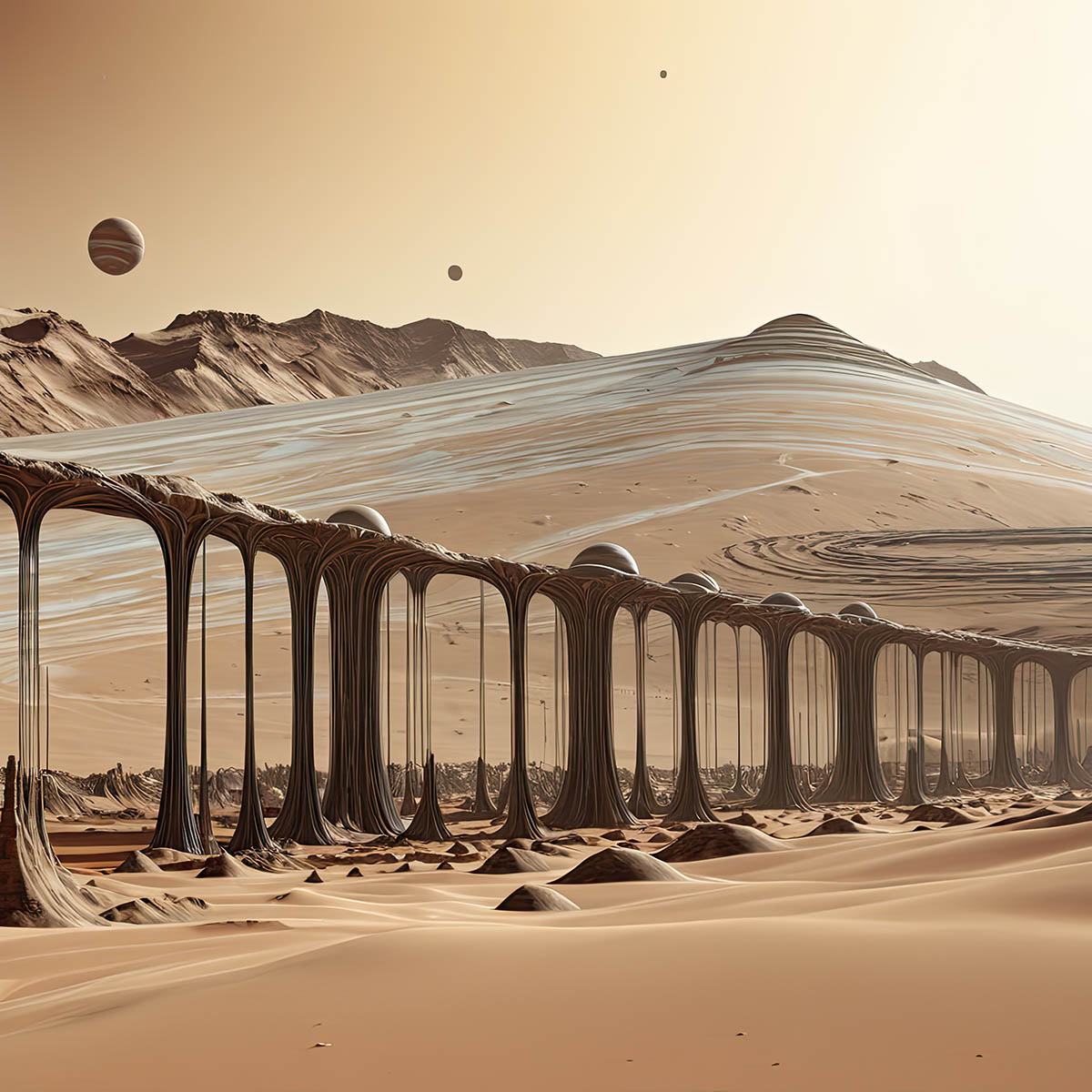
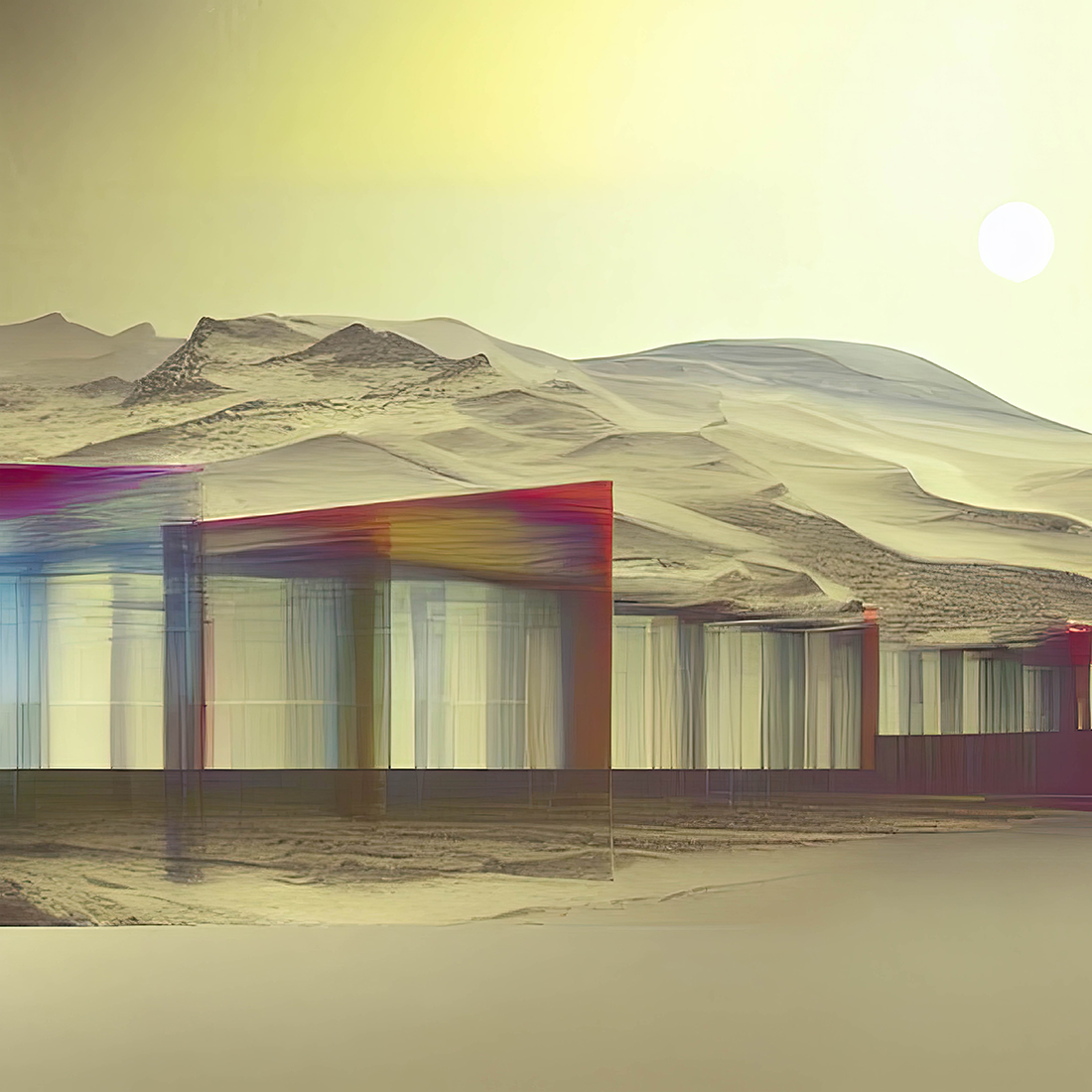
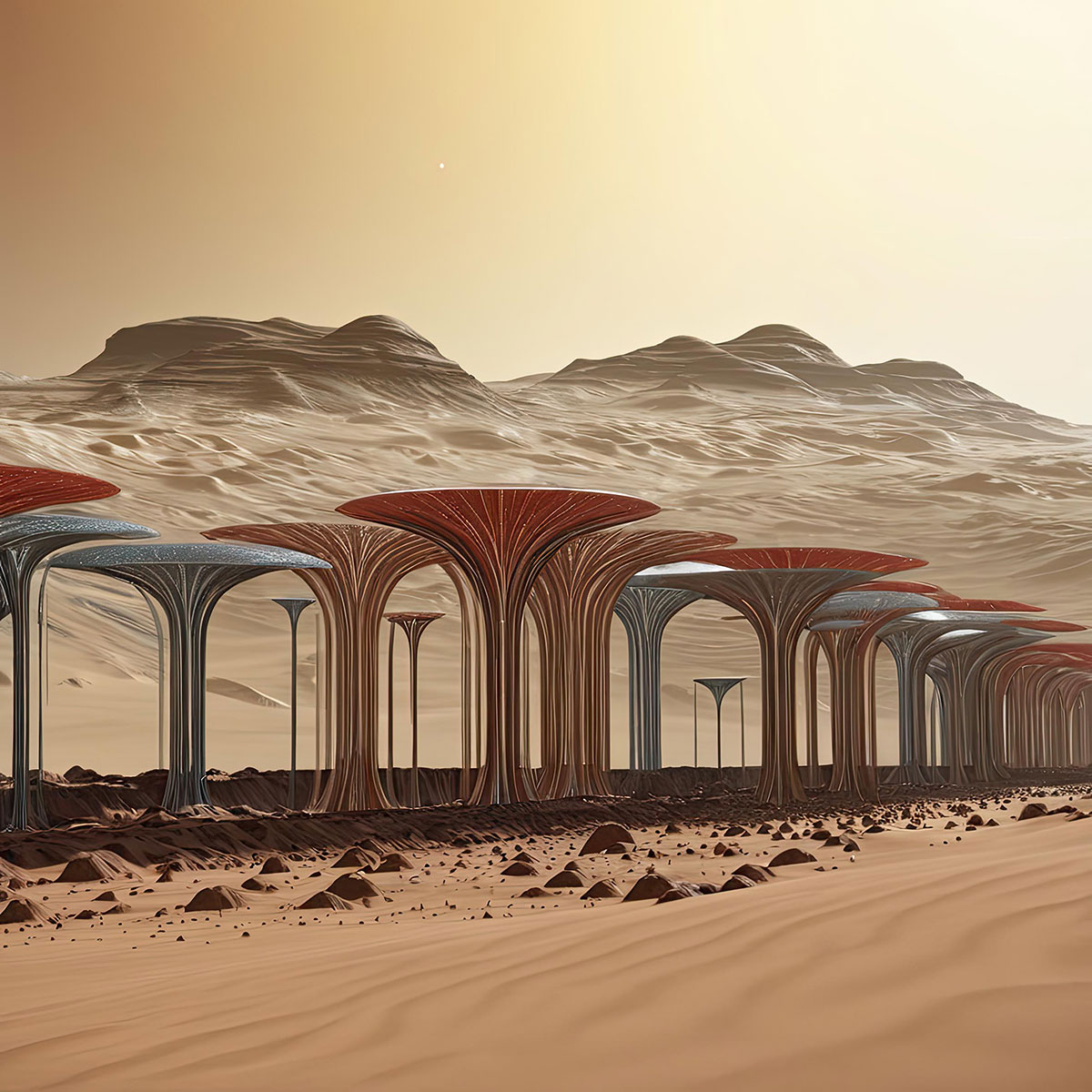
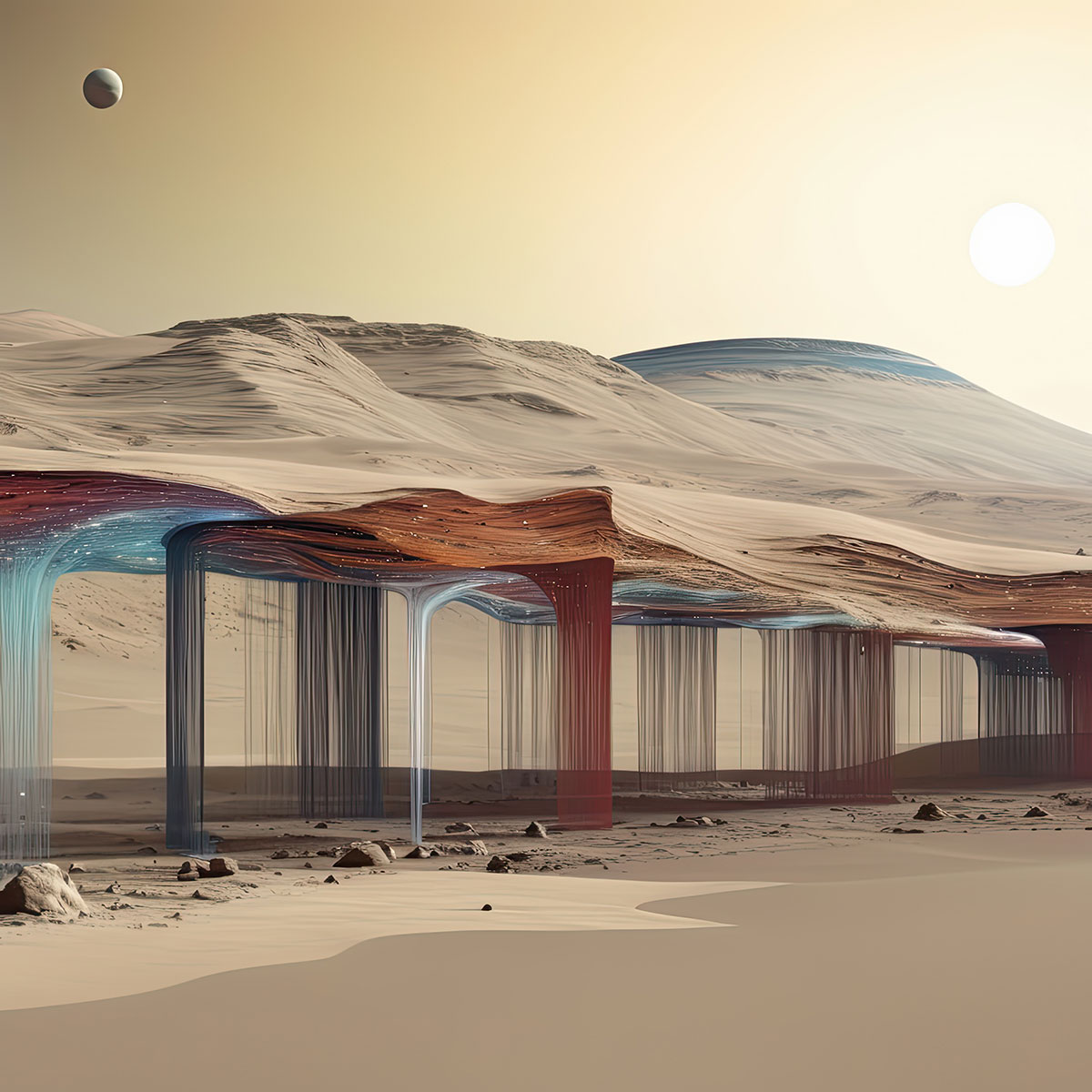
The computer graphics series Terraforming evokes the possibility of transforming Mars. The images lead us into a future in which humanity has become a multiplanetary species, yet its technological capabilities do not resolve its vulnerability on a cosmic scale. The visual world of the series is built on geological cross-sections, abstract landscapes, and artificial structures. Horizons, strata, and column-like elements blur the boundary between nature and technology. Mars appears as an experimental ecosystem in which human presence is minimal, yet decisive.
The images in the series were created through the use and digital transformation of terrestrial landscape photographs. We attempt to imagine the future of the neighbouring planet through our own environmental memories and landscape patterns. According to the current scientific consensus, the complete terraforming of Mars would require an extraordinary amount of time and energy and, with today’s technologies, is conceivable only in partial form. The planet’s weak magnetic field, low gravity, and thin atmosphere would result in the continuous loss of any artificially created atmosphere.
The images in the series reflect this scientific scepticism, depicting temporary and fragile states of equilibrium. The spaces cut into the interior of the planet and supported by columns suggest that the possibility of life does not emerge through the transformation of the entire planet, but rather within local, artificially maintained zones reminiscent of laboratories and shelters.
In relation to Terraforming, the question may arise: is humanity truly capable of turning an alien planet into a home, or does it merely adapt the environment temporarily to its own presence? The terraformed planet does not become natural; it remains a constant reminder that human presence is temporary and always dependent on conditions.